![Rowing Machine Handle Grip: Ergonomic Tips to Prevent Blisters[4][5][6]](/images/article/thumbnail/51c7025c-2054-482e-b66c-f0161ae38b95.avif)
Training, Technique & Benefits
Rowing Machine Handle Grip: Ergonomic Tips to Prevent Blisters[4][5][6]
21st Sep•9 min read
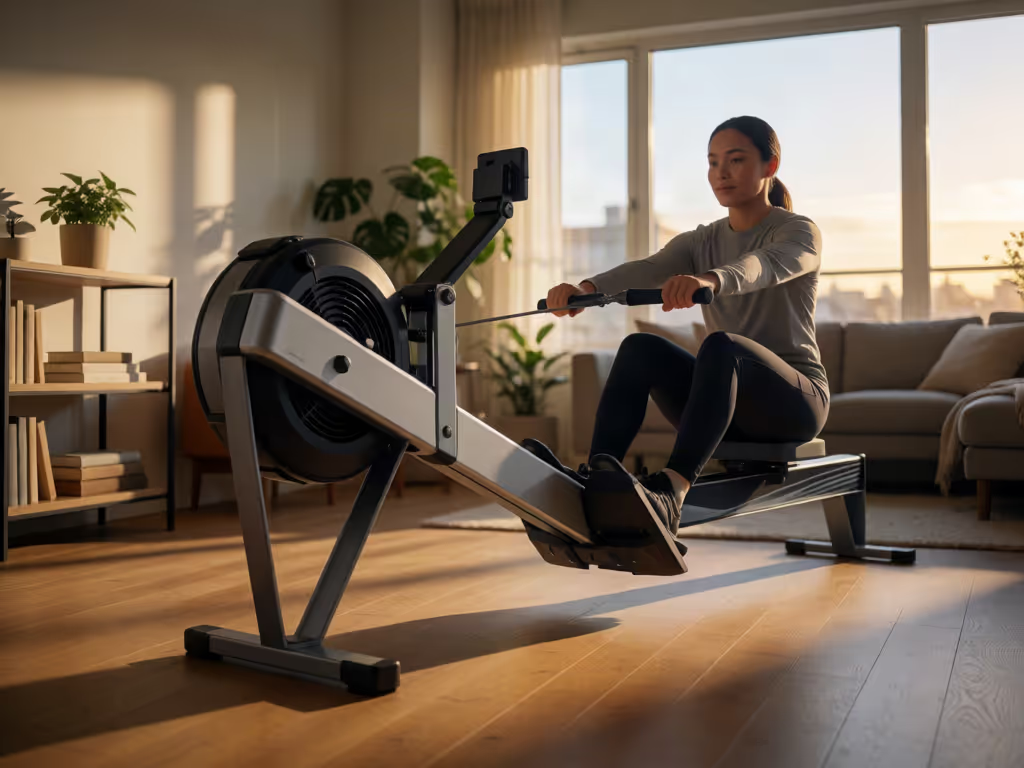
Use a progressive, rowing-specific start: easy strokes, technique rehearsal, and gradually stronger work. Choose a roughly 7-minute routine for compact sessions or a 12-minute build before harder training. Afterward, cool down briefly for transition and mobility—not as a proven way to prevent soreness or improve next-day performance.
A reliable rowing warm up routine does not need extra equipment, a long class, or a complicated app. It needs to move from easy, controlled strokes toward the pace and stroke rate you plan to use, while giving you a quick check on technique. The same principle makes rowing cool down exercises useful: they are a low-intensity transition and a convenient time for mobility, not a proven shortcut for eliminating soreness or improving tomorrow's performance.
For home rowers, that distinction matters. Your session may be a tightly scheduled 20 minutes before work, between meetings, or after a child is asleep. Treat the warm-up as part of the workout data, not disposable preamble: use the same display mode, note how the first easy strokes feel, and build gradually. Open beats closed when your data fuels long-term habits.

The best warm-up matches the session ahead. An easy steady row needs less preparation than hard intervals or a high-rate test, but both benefit from progressive intensity and rowing-specific movement.
A useful checklist has four parts:
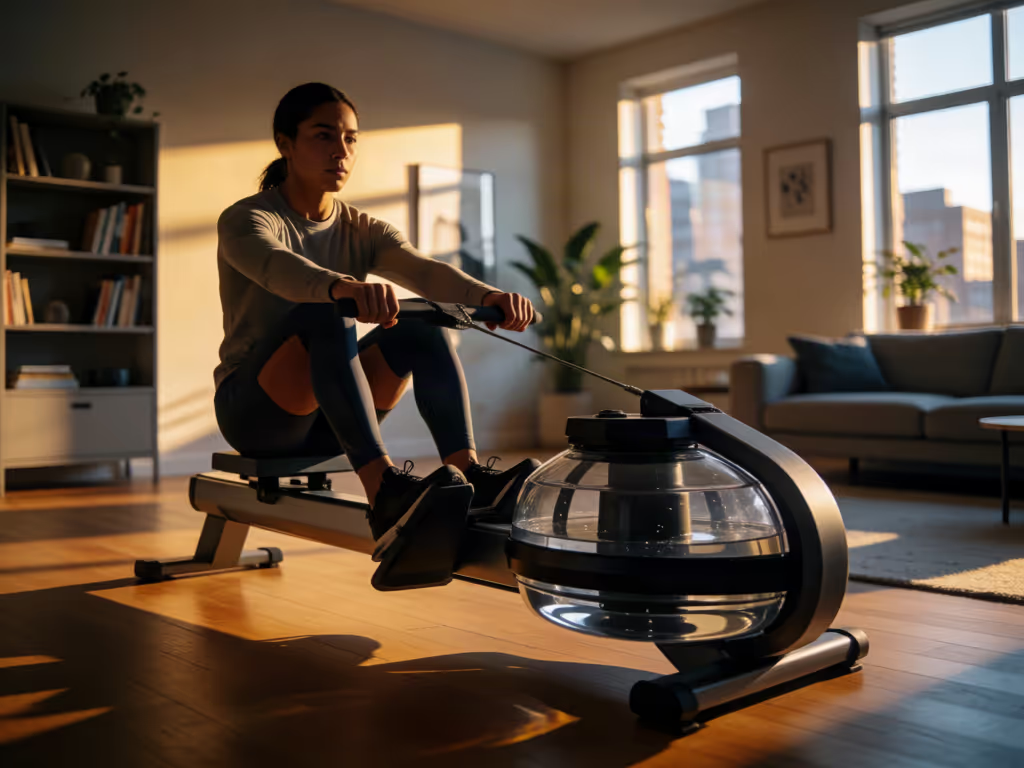
Keep a neutral, flat back while pivoting from the hips, as explained in this proper rowing form guide. On the drive, initiate with the legs; as they approach half extension, begin opening the hip angle; finish the draw with the arms after the legs are extended and the back is vertical. On recovery, straighten the arms first, pivot forward from the hips, then bend the knees until the shins are vertical.
This is more than formality. A low-intensity warm-up is the least stressful time to audit your stroke sequence before pace, fatigue, or a training app asks you to go faster. It is also a useful time to identify and correct common rowing form errors before they become harder to fix under fatigue. I learned to keep that check device-agnostic after an update once interrupted a paid training session halfway through an interval. You can structure an erg warm up plan around time, stroke count, rate, or perceived effort.
This roughly seven-minute routine follows a manufacturer-published Concept2 preparation sequence:
That totals roughly seven minutes. It is a practical Concept2 rowing warm up framework, not a universal requirement or a guarantee against injury.
This manufacturer-published 12-minute warm-up option uses a stroke-count progression. If you are still building consistency, pair this progression with a beginner rowing workout plan that matches your current time and distance tolerance.
The controlled alternation is the point. "Harder" should be relative to the easy strokes that precede it; it is not an instruction to sprint at maximum effort.
If your monitor is set to distance, row 250 m very easily, 250 m a little harder, 250 m easy, and 250 m a little harder. Then alternate 100 m at slightly higher intensity with 100 m at very low intensity for the next 1,000 m.
For readers who track multiple platforms, this is where I prefer a simple setup: monitor the interval in the rower display, record the session however you normally record it, and retain a local workout note if the app sync matters. Open where it counts, bridged where needed is a more durable plan than making a warm-up dependent on one subscription or firmware version.
Optional dynamic movement can make sense when it addresses a limitation you already notice in the stroke. General sports-medicine guidance favors active range-of-motion work, sport-specific movement, progressively rising intensity, cardiovascular activation, muscle activation, and neuromuscular control. It also emphasizes individualization for skill level, physical condition, and existing injuries.
A rowing-specific publisher's menu includes these options:
You do not need all six. Select one or two that support the area that feels limited, then get on the machine and row easily. For example, someone who notices a stiff upper back may choose cat/camel; someone whose hips feel restricted may choose a lunge with reach.
Long static holds immediately before a hard session are less compelling. In general athletic contexts, static stretching in isolation may temporarily reduce force and power, particularly with holds longer than 60 seconds. That is not a rowing-specific verdict against all pre-row stretching; it is a reason to favor movement and progression before demanding work.
A warm-up should make the first work interval feel familiar, not turn into a separate workout.
Keep expectations realistic. A short cool-down can create a calmer transition from hard rowing to the rest of your evening, and it can be a comfortable window for mobility. But available evidence summarized by a rowing coach does not support claiming that active cool-downs reliably improve next-day performance, prevent muscle soreness, improve general recovery, immune function, or range of motion. Do not use "clearing lactate" as the rationale.
A simple manufacturer-published example is:
If moderate rowing feels like too much after a very demanding session, choose an easy walk around your home instead. The useful outcome is a transition away from training, rather than immediately collapsing into prolonged sitting.
Choose the areas that feel most worked, and stay within a comfortable range:
A low-back twist is another published option. These are suggestions from a rowing-focused mobility menu, not a prescribed rehabilitation plan. You do not need to chase intensity or pain to make the few minutes count.
There is no one collected rowing-specific trial that establishes a mandatory duration for every person and every session. Still, a progressive, sport-specific start is a sensible default, especially before intervals, higher stroke rates, or a session where technique tends to unravel.
For a very easy, short row, begin with easy strokes and let slide length and pull intensity build gradually. For harder training, use the 7- or 12-minute options above. General guidance suggests 7-10 minutes immediately before athletic activity, while rowing-specific published examples range from about seven minutes to 12 minutes. The overlap is useful; the exact number is not magic.
Risk disclosure: Stop rather than trying to warm through pain. Dizziness, chest symptoms, unusual shortness of breath, or symptoms associated with an existing injury call for appropriately qualified clinical advice. Keep all movements smooth and pain-free.
For your next three sessions, use one warm-up format consistently and log three observations: whether your first work interval feels controlled, whether your stroke sequence stays clean, and whether any area repeatedly feels restricted. Then adjust one variable (more easy rowing, one mobility drill, or a gentler rate build).
The goal is not to collect rituals. It is to build a repeatable, portable pre- and post-row system that fits your schedule, your body, and the data setup you control.