![Rowing Machine Handle Grip: Ergonomic Tips to Prevent Blisters[4][5][6]](/images/article/thumbnail/51c7025c-2054-482e-b66c-f0161ae38b95.avif)
Training, Technique & Benefits
Rowing Machine Handle Grip: Ergonomic Tips to Prevent Blisters[4][5][6]
21st Sep•9 min read

Breathe out through the drive and in during recovery, starting with one breath per stroke at an easier effort. As intensity rises, you can test a two-breath option, but the best pattern is the one you can repeat comfortably and consistently.
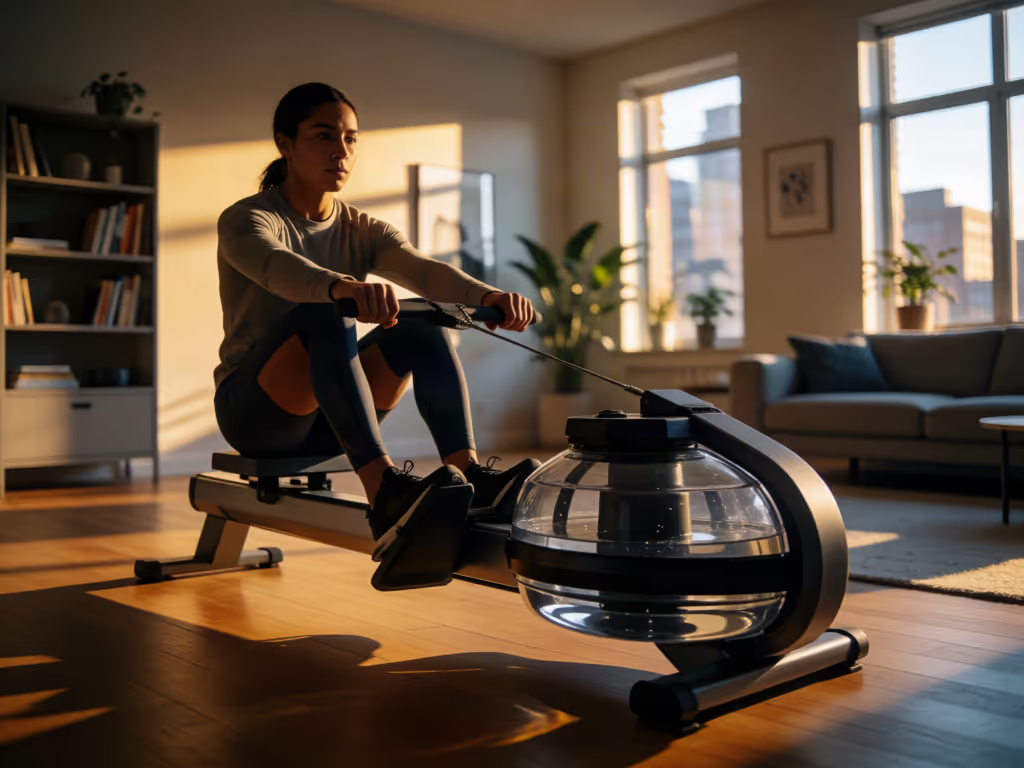
A dependable rowing breathing technique is less about finding a magic lung cue and more about giving each stroke a repeatable rhythm. If you are wondering how to breathe on a rowing machine, start with a simple coordination: breathe out through the drive and breathe in on the recovery. Then adjust the number and timing of breaths as the work becomes harder. The target is not a universal breaths-per-stroke number; it is a pattern you can recognize, repeat, and change deliberately.
That matters on a home erg, where a rushed session can turn into a tangle of screen numbers, stroke timing, and unnecessary tension. Fit first, power follows: settle your position and stroke rhythm, then let your breath attach to that rhythm rather than trying to force a complicated technique from the first minute.
The most useful starting cue is plain:
Concept2 describes this as a common low-intensity pattern: one breath per stroke, with the exhale spread across the drive and the inhale on recovery. Rowing coaching guidance from Sparks uses the same broad pairing: exhale on the drive, inhale on the recovery.
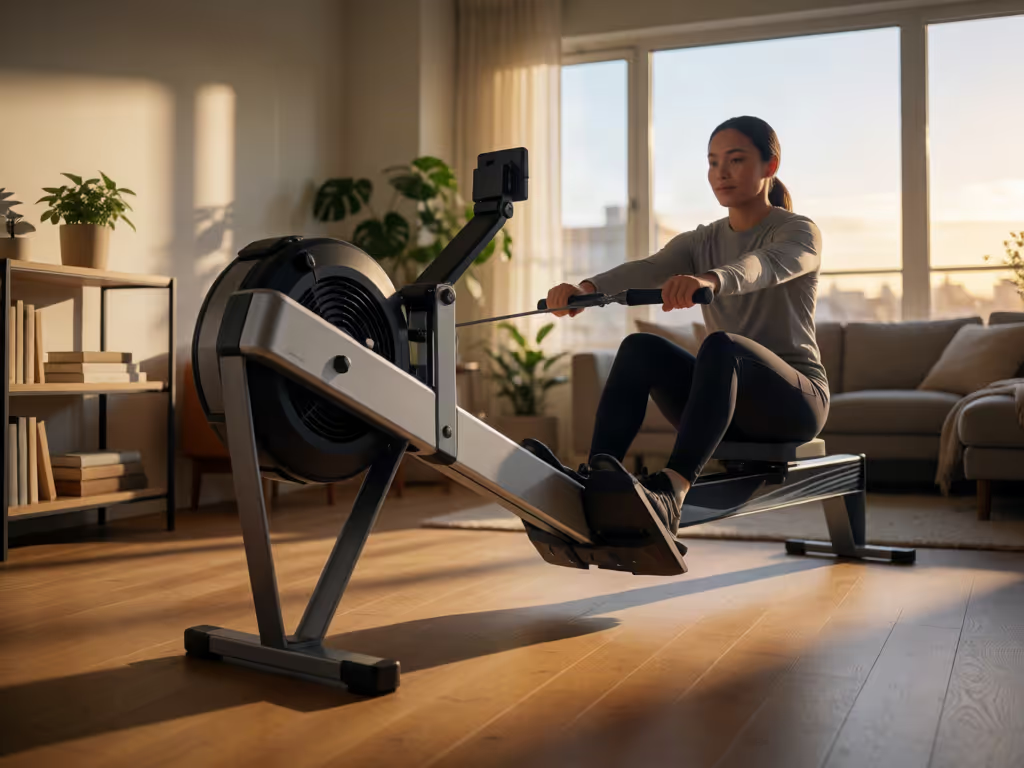
Treat those four rowing stroke phases as timing landmarks, not a test you can fail. You do not need a dramatic blast of air or a giant inhale. A gradual, audible-but-not-strained exhale is enough to give the stroke a consistent sound and feel.
Good fit turns discipline into a habit you actually keep.
If your breath is irregular at an easy effort, reduce the task. Row several relaxed strokes while saying the cue internally: "out on drive, in on recovery." Count only after it feels simple.

For a steady, lower-intensity row, use this repeatable template:
This is not a demand to inhale only through your nose or exhale only through your mouth. The rowing-specific guidance here is about breath timing, not a required airway route. Choose the route that lets the breath remain unforced.
Use a very manageable pace and observe three comfort metrics:
If the answer is no, simplify, not by holding your breath, but by easing the row until the pattern is clear. Exercise breathing varies from person to person, and respiratory frequency is sensitive to changes in exercise tolerance. That makes a repeatable personal baseline more useful than copying another rower's exact sound or count.
Harder work may ask for a different pattern. Concept2 offers a two-breath-per-stroke option for high-intensity rowing:
The purpose of practicing this is coordination, not chasing a claim that a certain count will automatically improve power or endurance. The point at which you move from one breath to two is highly personal. There is no established universal stroke-rate threshold. For a deeper look at how cadence affects technique and training goals, see this guide to optimal rowing cadence.
You may encounter apparently opposite coaching advice. For example, Sparks describes two full breaths per stroke at 18-22 strokes per minute, but one breath per stroke at 30-34 strokes per minute. Concept2 instead presents one breath as a common lower-intensity example and two breaths as its high-intensity option.
That disagreement is useful information: breath count is not a law of the erg. Both approaches still anchor exhalation to the drive and inhalation to recovery. Test one approach for an entire interval, then assess whether you could keep the timing consistent. Avoid switching breath patterns randomly in the middle of every few strokes unless the effort itself has clearly changed.
For indoor rowing respiratory control, decide your breathing plan before you start each work block. This keeps the monitor from dictating every breath.
Use one gradual exhale on the drive and one inhale on recovery. Your job is simply to make the pattern recognizable.
Start with your established one-breath rhythm. If it no longer feels workable, try Concept2's two-breath option for the remainder of that interval. Keep it for enough strokes to judge it; one awkward stroke is not enough data.
Return to an easy, comfortable breath. Do not use intentional hyperventilation or breath-holding as a performance tactic. Exercise research summarized in a recent editorial found no repeated-sprint benefit from dry breath-holding or hyperventilation conditions, and some participants reported effects such as dizziness, heaviness, or deafness. That evidence is not from rowing, but it is a sound reason not to add extremes to your erg breathing tips.
When breathing feels messy, the fix is usually a smaller, more measurable adjustment than "try harder." Use these checks. If timing problems persist, review these common rowing form errors and corrections before blaming your breathing.
Make the exhale quieter and longer. Think release air, not blast air. If you can only exhale at the very end, lower the effort temporarily and restore the gradual drive exhale.
Do not try to force an oversized inhale. Take the breath that feels comfortable, then see whether a second brief breath during recovery gives you a more sustainable rhythm. If it does not, return to one breath and reduce intensity until the pattern settles.
Use a short attention cycle: four strokes noticing breath timing, four strokes checking the display, then back to timing. The goal is a pattern that survives distractions in a real apartment workout, not a perfect drill that disappears the moment a notification appears.
Start the next few strokes with a gentler exhale and an unforced inhale. If you are using a relaxed-breathing practice away from the erg, general guidance is to let the breath move as deeply into the belly as is comfortable, without forcing it. That is a relaxation cue, not a rowing-performance prescription.
A simple log turns experimentation into useful information, especially when paired with meaningful rowing machine metrics. After a session, note:
| Workout section | Pattern used | Consistency | Comfort note |
|---|---|---|---|
| Easy row | One breath per stroke | Steady / mixed | Was the inhale unforced? |
| Work interval | One or two breaths per stroke | Steady / mixed | When did the pattern change? |
| Between intervals | Comfortable free breathing | Steady / mixed | Did breathing settle naturally? |
You are not trying to diagnose yourself from these notes. You are building a practical map of what is repeatable at different effort levels. After a handful of rows, you may find that one pattern works best for your everyday steady session while another is easier to organize during harder work.
That is the analytical side of breathing practice: one variable at a time, one clear cue, and an honest comfort check. Breathing deserves the same approach. Do not force a fashionable pattern. Find the one you can come back to.
Coordinate breath with the stroke: exhale on the drive and inhale on recovery. At lower intensity, a common option is one breath per stroke. At higher intensity, Concept2 describes a two-breath option. Experiment to find when, or whether, that change suits your effort.
For the basic pattern, inhale during recovery. In Concept2's high-intensity option, exhale at the finish of the drive; then, during recovery, inhale, exhale quickly, and inhale again just before the catch.
No. Keep a pattern consistent within a section of the workout, but allow the pattern to change as intensity changes. The available coaching guidance does not support one mandatory breath count for every rower or every stroke rate.
The best rowing breathing technique is often the least dramatic one: a clear exhale on the drive, a comfortable inhale on recovery, and enough consistency that you can tell when the effort has changed. Begin with one breath per stroke, test the two-breath option only when needed, and record what remains comfortable and repeatable.
For your next erg session, spend the first two minutes practicing the basic cue before you chase pace, distance, or an app workout. That small check-in gives you a breathing pattern you can actually use when the session gets busy, and a routine you are more likely to keep.