![Rowing Machine Handle Grip: Ergonomic Tips to Prevent Blisters[4][5][6]](/images/article/thumbnail/51c7025c-2054-482e-b66c-f0161ae38b95.avif)
Training, Technique & Benefits
Rowing Machine Handle Grip: Ergonomic Tips to Prevent Blisters[4][5][6]
21st Sep•9 min read
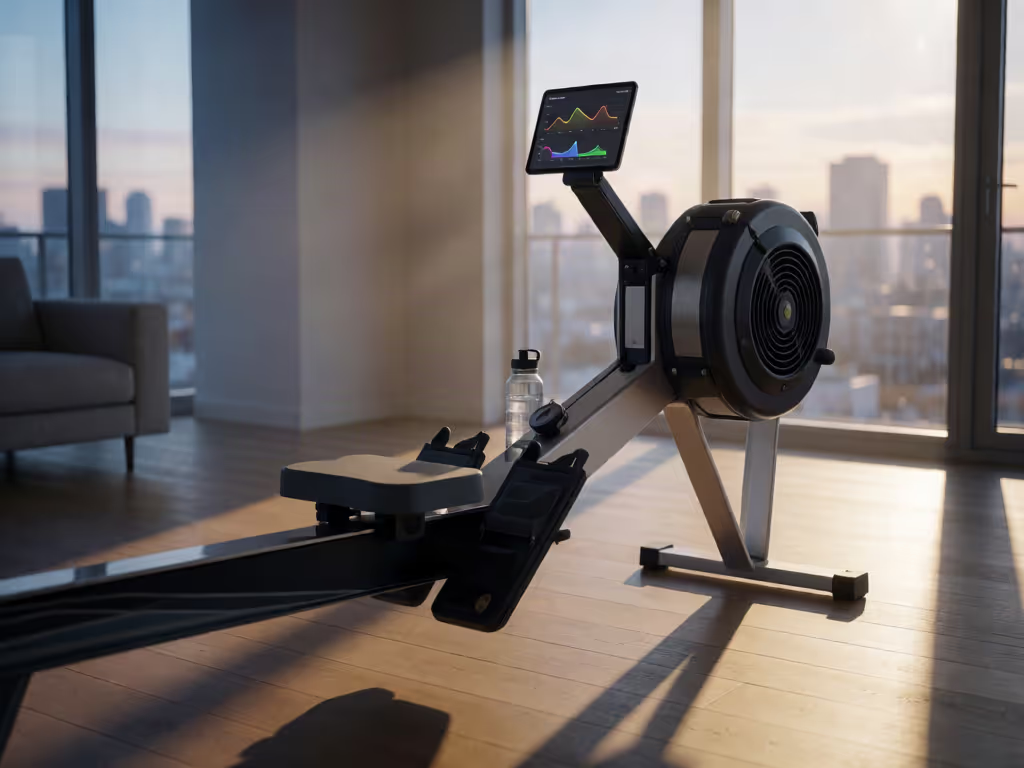
Use Concept2’s 12-week 2K structure as a repeatable training experiment: row three times weekly, benchmark in Week 1, progress interval work, test again in Week 8, then repeat Cycle 2 while tracking pace.
Important: This is an editorial framework, not personalized medical, rehabilitation, or injury-management advice. Pain, health conditions, or a long training break warrant individual guidance before hard testing.
A rowing periodization plan makes indoor training measurable instead of random: you repeat comparable indoor rower exercises, record pace, and let the work become more specific as your 2,000 m test approaches. For apartment-based athletes, that structure is especially useful (three intentional sessions are easier to schedule, easier to keep quiet, and less likely to turn a home erg into a guilt-inducing clothes rack).
This is an editorial framework built around Concept2's published 12-week 2K plan: complete Cycle 1 once, then Cycle 2 twice. It is not a personalized medical, rehabilitation, or injury-management programme. If you have pain, a relevant health condition, or are returning after a long break, get individual guidance before testing hard.
Periodization means changing programme variables over time so the training stimulus remains purposeful rather than static. In this 12 week rowing training plan, the practical variables are:
A 2K is short enough to reward speed but long enough to expose poor pacing. The goal is not to make every row an all-out effort. It is to build a record of controlled interval paces, then use that record to set realistic targets.
Your logbook is the control system: pace, stroke rate, session completion, and how the effort felt.
Concept2 measures pace as time per 500 metres, where a lower time is faster. Its plan uses three rowing workouts per week, with an optional fourth workout for people who want it. That is a sensible baseline for a busy home setup: space sessions across the week and protect recovery rather than compressing hard workouts into consecutive days.
World Rowing's season-long framework moves from general preparation toward more specific endurance and technique work. A home 2K block cannot be treated as a miniature elite season, but the sequence is useful: first establish repeatable work, then accumulate more specific interval work, then test.
Concept2's structure provides the calendar below. The published guidance is explicit for Weeks 1-8; for a 12-week plan, it directs you to complete Cycle 1 once and Cycle 2 twice. Do not improvise a new "peak" or taper simply because a calendar says 12 weeks (this source does not provide a universal rowing-specific taper protocol).
| Weeks | Block purpose | What to do |
|---|---|---|
| 1-3 | Benchmark and interval progression | Complete the Week 1 2K benchmark, then progress through the listed intervals while logging work-interval pace. |
| 4 | Continue the published plan | Follow the listed Week 4 workout schedule and compare pace to prior equivalent sessions. |
| 5-7 | Listed interval sessions | Complete the listed interval formats, prioritizing sustainable, comparable pacing. |
| 8 | Checkpoint | Complete the listed shorter interval sessions and the scheduled 2K test. |
| 9-12 | Repeat Cycle 2 | Repeat Cycle 2 as the published 12-week structure directs; use the plan's workout page for its exact session order. |
That final row is intentionally conservative. The available plan instructions establish the Cycle 2 repetition, but do not separately itemize a new Weeks 9-12 workout calendar. Treat the second Cycle 2 as a repeatable block, not permission to add more unscheduled intensity.
The opening sessions are approachable in format but demanding when paced honestly. Before each workout, follow a 5-10 minute rowing warm-up: start easy, build to moderate work, and add a few brief higher-intensity bursts near the end.
Week 1 begins with a 2,000 m time trial. Record the final time, but do not sprint the opening section. The plan's guidance is to avoid starting too fast and aim to increase pace over the second half.
Its two core Week 1 interval sessions are:
By Week 3, the interval work progresses to:
For these workouts, rest means very easy, zero-intensity rowing (not another hard segment). The monitor should show work and recovery as distinctly different efforts.
The plan lists the following interval sessions for Weeks 5 and 6:
Week 7 shifts to shorter work periods:
The progression rule is clean: when you repeat the same workout, try to improve pace. When the number of intervals rises, try to hold the same pace. That distinction prevents a common error (adding intervals and forcing a major pace gain in the same session).
During the listed workouts, Concept2 advises a stroke-rate range of 24-34 strokes per minute; this data-driven cadence guidance can help explain how stroke rate should change with different training goals. Use that as plan-specific guardrails, not a rule that every rower must copy regardless of experience or comfort.
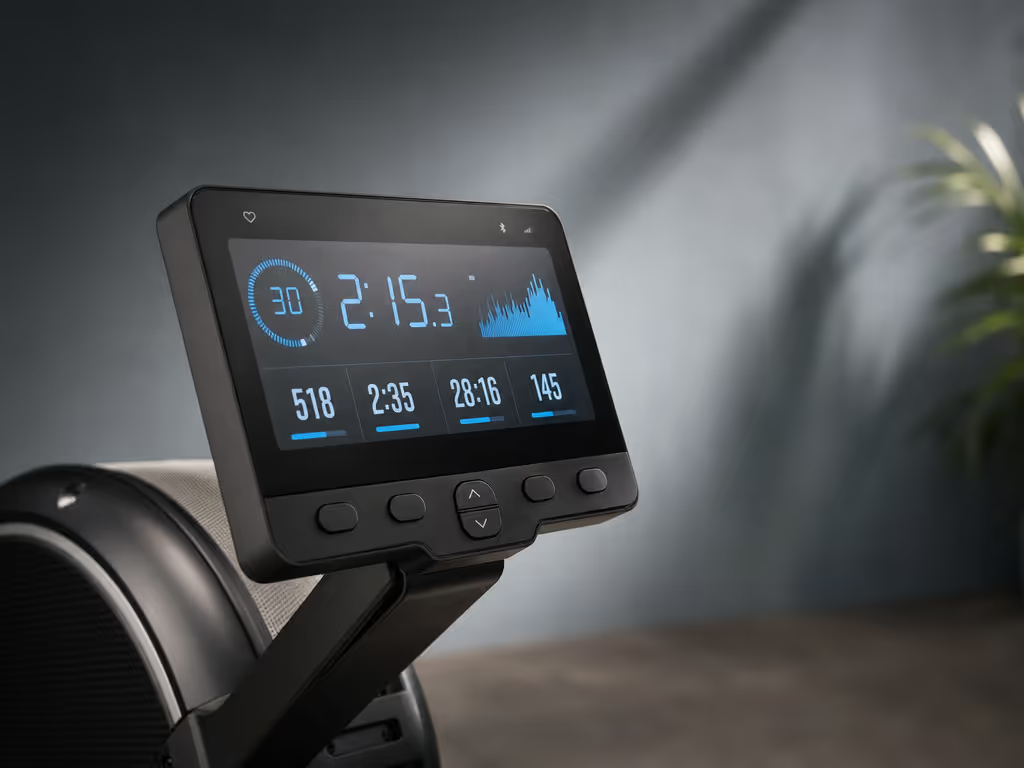
Record the combined average pace of the work portions for each interval session, then use this rowing metrics guide to turn the data into meaningful training decisions. Then use prior averages to choose future targets. This creates a simple data path:
Workout completed
 ↓
Work-interval average pace recorded
 ↓
Comparable session repeated or extended
 ↓
Maintain pace or make a small improvement
 ↓
2K race-plan target becomes evidence-based
Log four fields after each session:
If your rower and app support exports, retain a local copy of the workout file alongside your preferred health or training platform. A polished dashboard is useful; a portable record is more useful when software changes. I learned that after an update broke a paid training app in the middle of an interval block and left sessions desynced overnight. Open beats closed when your data fuels long-term habits. Open where it counts, bridged where needed: keep the monitor log as the source record and let apps be analysis layers.
Week 8 includes a 2,000 m test after shorter listed interval work: 6 × 2 minutes and 4 × 4 minutes appear before the test, with an optional 10,000 m consistent-pace row also listed. This test is a checkpoint, not a verdict on your fitness. For athletes preparing specifically for performance testing, our competitive erg metrics guide provides additional context on machine features, pacing data, and training protocols.
For the test itself, Concept2 describes two pacing options:
Choose one strategy before you begin. The useful comparison is not only the finish time; it is whether your second half was controlled enough to execute your plan. Repeat the same warm-up framework and record the conditions that affect comparability, such as time of day or a change in machine setup.
You can add flexibility and non-rowing work, but do not let it sabotage the three key rowing sessions. World Rowing includes flexibility and additional exercises in broader programmes to support all-round development. For healthy adults adding novice resistance training, the American College of Sports Medicine describes 2-3 days per week and loads in an 8-12 repetition-maximum range; that is resistance-training guidance, not a rowing prescription.
The practical constraint is recovery. Progression is not only "more." In strength programming, it can mean manipulating load, repetitions, tempo, rest, or total volume over time. If hard rowing quality falls, reduce optional volume before altering the core plan. If you want to combine this plan with lifting, see our guide to integrating rowing with strength training for ways to structure both modalities without undermining recovery. Rest days matter.
Start with the Week 1 2K, schedule three protected rowing windows, and create a simple pace log before you chase a target time. At Week 8, review the trend in comparable intervals (not just the test result), then repeat Cycle 2 as directed for the 12-week format.
The best 2k erg training structure is the one you can repeat accurately: stable schedule, deliberate recovery, comparable data, and no dependence on one fragile app ecosystem.